How to set up workflows to find land developers
If you’re a real estate agent, developer, or HOA management company, you may be looking for land developers to partner with on projects.
Finding the right developers can be challenging, but by setting up workflows in your CRM, you can streamline the process and find the right partners for your projects.

Here’s how to do it:
Step 1: Define Your Criteria for Land Developers.
The first step is to define your criteria for land developers. This could include the developer’s location, experience, portfolio, and reputation. Once you have defined your criteria, you can use them to create workflows in your CRM.
Step 2: Use Your CRM’s Search and Filter Tools
A CRM can help you store and manage information about land developers and automate tasks like lead qualification and nurturing. To find land developers, you can use a CRM to create workflows to help you identify potential partners. Some CRMs we recommend for this process are Salesforce, HubSpot, and our software, FunnelWhirl.
Salesforce is a widely used CRM that offers a range of features for managing leads, contacts, and opportunities. You can use Salesforce to create workflows that help you identify land developers based on your criteria, such as location, experience, and portfolio. Salesforce also offers integrations with third-party tools to help you automate tasks and save time.
HubSpot is another popular CRM offering various features for managing leads and automating workflows. You can use HubSpot to create workflows that help you qualify and nurture leads and track their engagement with your content. HubSpot also offers integrations with third-party tools to help you find and manage land developers more effectively.
Finally, our software, FunnelWhirl, is a powerful and customizable CRM that can help you manage the entire sales process, from lead generation to conversion. With FunnelWhirl, you can create workflows that help you identify and qualify land developers and track their engagement with your content. FunnelWhirl also offers integrations with third-party tools to help you automate tasks and save time.
No matter which CRM you choose, it’s essential to define your criteria for land developers and use your CRM’s search and filter tools to find potential partners. Once you have identified potential partners, you can use the workflows in your CRM to qualify and nurture leads and track their engagement with your content. By using a CRM to find land developers, you can save time and effort while still finding the right partners for your projects.
Step 3: Create a Workflow for Lead Qualification.
Once you have found potential land developers, the next step is to qualify and nurture them as leads. This can be done by creating a workflow that includes multiple methods of communication, such as email, text, voicemail drops, and social messaging outreach.

Using multiple methods of communication can help you reach potential developers in a way that is most convenient for them. For example, some developers prefer to communicate via email, while others prefer to receive text messages. By using the method preferred by them, you can increase the chances of getting a response and building a relationship with the potential developer.
In your workflow, you can include a series of questions that the potential developer must answer to qualify as a lead. These questions can be related to their experience, portfolio, and availability. By asking these questions, you can determine whether the developer is a good fit for your projects.
You can also use your CRM to automate the follow-up process and nurture the lead. This can be done by creating a workflow that includes a series of follow-up emails, text messages, voicemail drops, and social messaging outreach. These follow-ups can be used to build a relationship with the potential developer and keep them engaged in your projects.
In addition to using multiple methods of communication, it’s essential to consider the timing and frequency of your follow-ups. You don’t want to overwhelm the potential developer with too many messages, but you don’t want to wait too long between follow-ups. Finding the right balance can keep the potential developer engaged and interested in your projects.
In conclusion, creating a workflow for lead qualification and nurturing is essential for finding the right land developers for your real estate or HOA management projects. By using multiple methods of communication, such as email, text, voicemail drops, and social messaging Outreach, you can increase your chances of getting a response and building a relationship with the potential developer. With the proper workflow and follow-up strategy, you can find the right partners for your projects and take your business to the next level.
Step 4: Create a Workflow for Lead Nurturing
To manage the lead nurturing process effectively, it’s essential to use triggers, open rates, and a visual pipeline. This can help you track where each potential developer is in the sales process and ensure they receive the right messages at the right time.
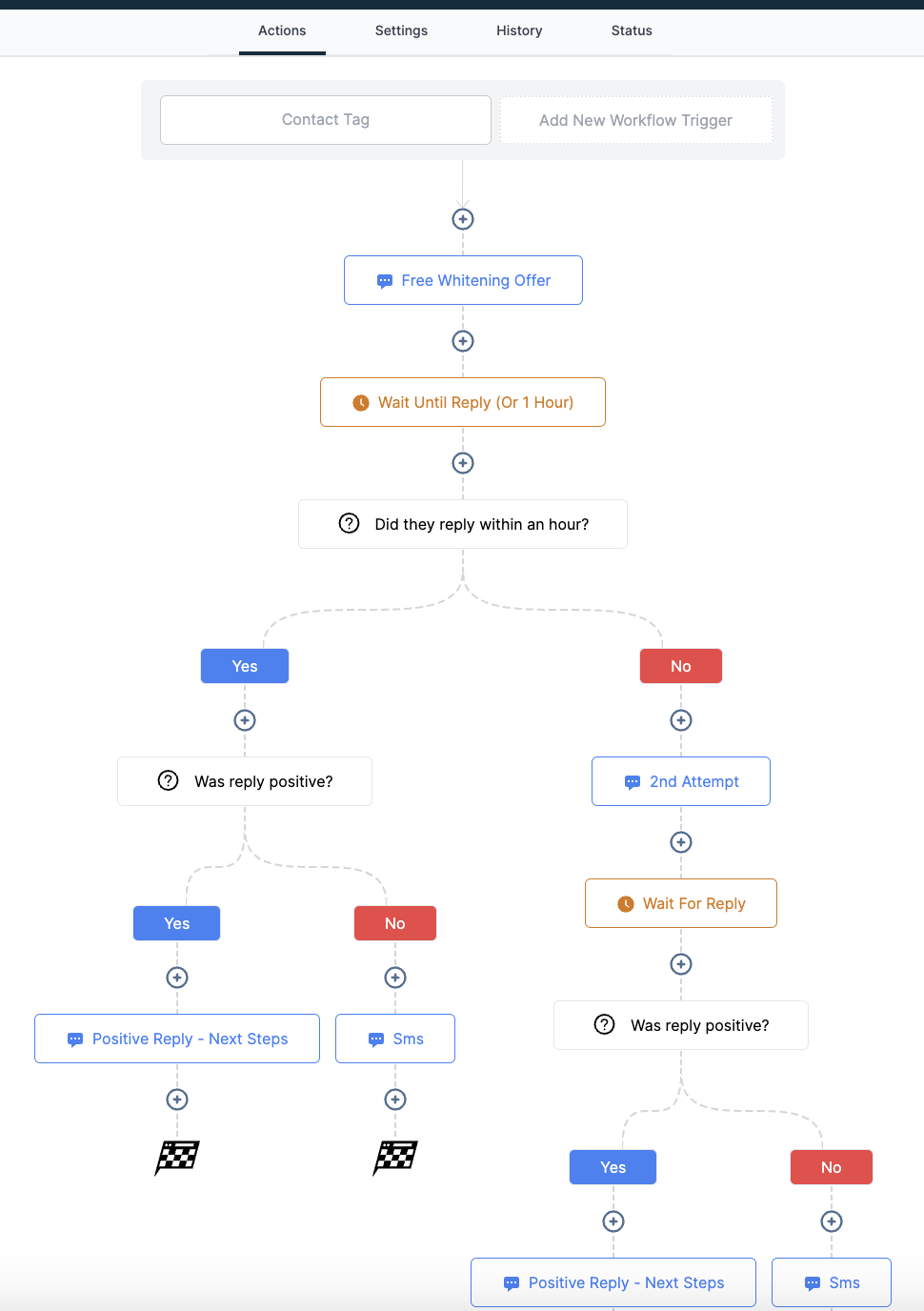
Triggers are events that automatically initiate a specific action in your CRM, such as sending an email or assigning a task to a salesperson. By setting up triggers in your CRM, you can automate tasks and save time. For example, if a potential developer clicks on a link in your email, this could trigger an automatic follow-up email.
Open rates are the percentage of recipients who opened your emails. By tracking available rates, you can determine which emails resonate with potential developers and which are not. This can help you adjust your messaging and improve your chances of converting leads into customers.
A visual pipeline is a graphical representation of the sales process, from lead generation to conversion. This can help you track where each potential developer is in the sales process and identify areas where you need to focus your efforts. For example, suppose you notice many potential developers dropping out of the process at a particular stage. In that case, you can adjust your messaging to address any concerns they may have.
By using triggers, open rates, and a visual pipeline, you can effectively manage the lead nurturing process and ensure that you are converting as many leads as possible. This allows you to set up triggers to send follow-up emails based on specific actions, such as clicking on a link or filling out a form. You can also track open rates to see which emails perform well and adjust your messaging accordingly.
In addition, a visual pipeline can help you track where each potential developer is in the sales process. This can help you identify areas where you need to focus your efforts and adjust your messaging to address any concerns they may have.
Using triggers, open rates, and a visual pipeline can help you effectively manage the lead-nurturing process and convert more leads into customers. By setting up triggers, tracking available rates, and visualizing your sales process, you can streamline your workflows and ensure you most effectively nurture your leads.
Step 5: Use Analytics to Improve Your Workflows.
Finally, using analytics to improve your workflows over time is essential. By tracking the results of your workflows, you can determine what is working and what needs to be improved. This can include analyzing the open and click-through rates of your follow-up emails or tracking the conversion rates of your lead qualification process.
You can continuously improve your workflows and find the right land developers for your projects using analytics.
Finding Land Developers is Worth it for HOA Management Companies

For HOA management companies, finding land developers can be significant. When builders build homes, they typically give the neighborhood to a management company after completion. By finding the right land developers to partner with, HOA management companies can ensure that the areas they manage are developed with the highest quality and meet the community’s needs.
In addition, working with land developers can provide HOA management companies with opportunities to add value to the community by identifying and proposing new amenities or features that amenities could include in the development. By working closely with land developers, HOA management companies can help shape the future of the communities they manage and provide a higher level of service to homeowners.
Setting up workflows in your CRM can be an effective way to find land developers for your real estate or HOA management projects. By defining your criteria, using search and filter tools, creating workflows for lead qualification and nurturing, and using analytics to improve your workflows, you can streamline the process and find the right partners for your projects. For HOA management companies, finding the right land developers can ensure high-quality developments and add value to the community.
